
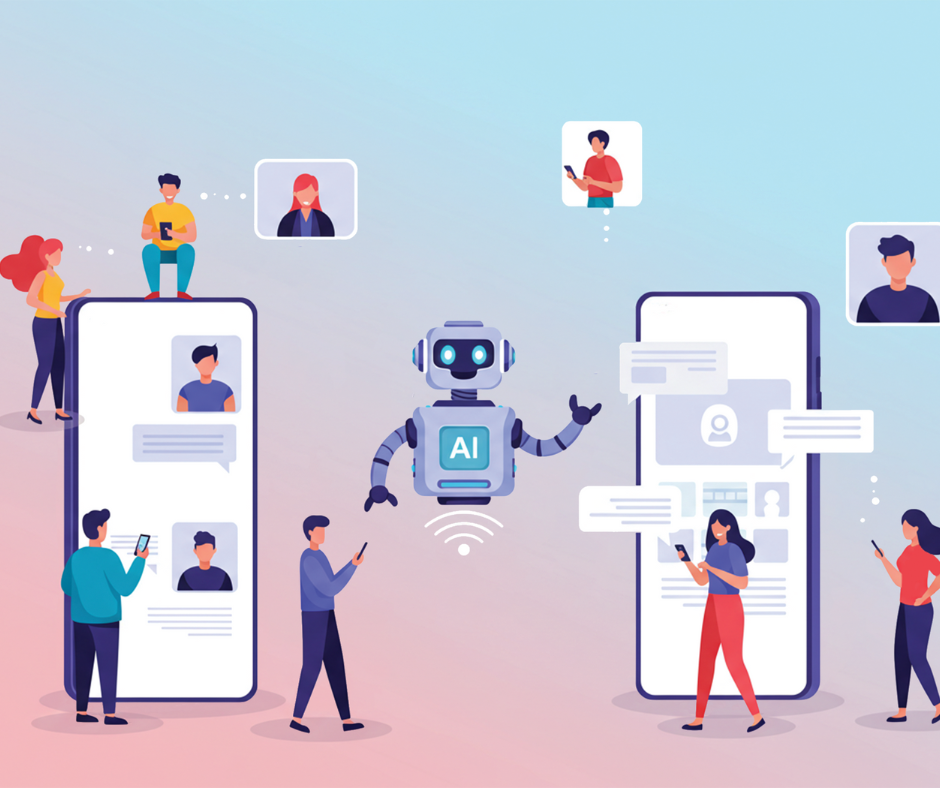
Artificial Intelligence is no longer just a technology. It has become a cultural force — shaping how teams think, how organizations operate, and how leaders influence the future.
In boardrooms across the world, senior leaders are discovering a truth they can no longer ignore: AI success is not determined by algorithms alone, but by the cultural mindset of the people who use them.
Today, the convergence of AI and culture is not optional. It is an unavoidable reality — one that demands courage, clarity, and decisive leadership. The decisions made now will define whether companies rise with the next wave of transformation or get quietly erased by it.
Below are five principles every senior leader must internalize and act on immediately. These principles are not theories; they are survival strategies for organizations navigating an unpredictable, AI-powered decade.
1. Build a Culture Where Curiosity is Non-Negotiable
Organizations fail not because technology is absent, but because curiosity is.
AI thrives in environments where people ask questions, challenge old processes, and welcome new ways of thinking. When curiosity dies, innovation collapses.
Senior leaders must:
-
Encourage teams to experiment with AI tools without fear
-
Reward questions more than perfect answers
-
Normalize learning as a daily requirement, not a yearly workshop
If curiosity is missing from your culture, AI will not save you. It will expose you.
2. Empower People Before You Empower Machines
AI will transform workflows, roles, and decision-making. But people remain the heart of every cultural shift.
Leaders must create environments where teams understand what AI is, what it isn’t, and how it strengthens — not threatens — their work.
This means:
-
Training employees at all levels
-
Clarifying the human-AI partnership
-
Communicating transparently about changes
Fear kills innovation. Empowerment ignites it.
3. Make Ethical Leadership the Foundation of AI Adoption
The rise of AI brings a rise in responsibility.
Trust is the most valuable currency senior leaders hold. Without it, no AI initiative will survive long enough to produce results. Ethics cannot be an afterthought or a compliance checkbox. It must be the core of cultural identity.
Leaders must:
-
Put fairness, transparency, and accountability at the center
-
Audit AI systems for unintended harm
-
Ensure data is handled with discipline and respect
An ethical culture is not only good governance — it is a competitive edge.
4. Break the Silos: AI Requires Collective Intelligence
AI is most powerful when diverse minds collaborate.
When departments guard their data, protect their territories, or compete instead of unify, organizations fall behind.
Senior leaders must actively dismantle silos by:
-
Creating cross-functional AI taskforces
-
Encouraging shared data ecosystems
-
Redesigning processes around collaboration, not hierarchy
AI rewards unity. It punishes fragmentation.
5. Lead With Vision, Not Fear
AI is rewriting industries, jobs, and expectations.
In uncertain times, teams look to senior leaders for direction — and silence is leadership failure. The leaders who thrive in the AI era communicate boldly, think long-term, and take responsibility for shaping the future, not reacting to it.
This requires:
-
A clear AI roadmap
-
Regular communication on progress
-
A commitment to leading transformation rather than defending tradition
Culture adapts to the voice of leadership. If the voice is strong, the culture becomes strong. If it is uncertain, the culture fractures.
Final Call to Action for Senior Leaders
The intersection of AI and culture is not a crossroads — it is a merging highway. You can’t choose between AI transformation and cultural transformation. You must drive both, simultaneously and with conviction.
Leaders who embrace these five principles will shape resilient, adaptive, and future-proof organizations. Those who delay will watch faster, braver competitors redefine the market.
The future is already here.
The question is: Will your culture be strong enough to lead it?